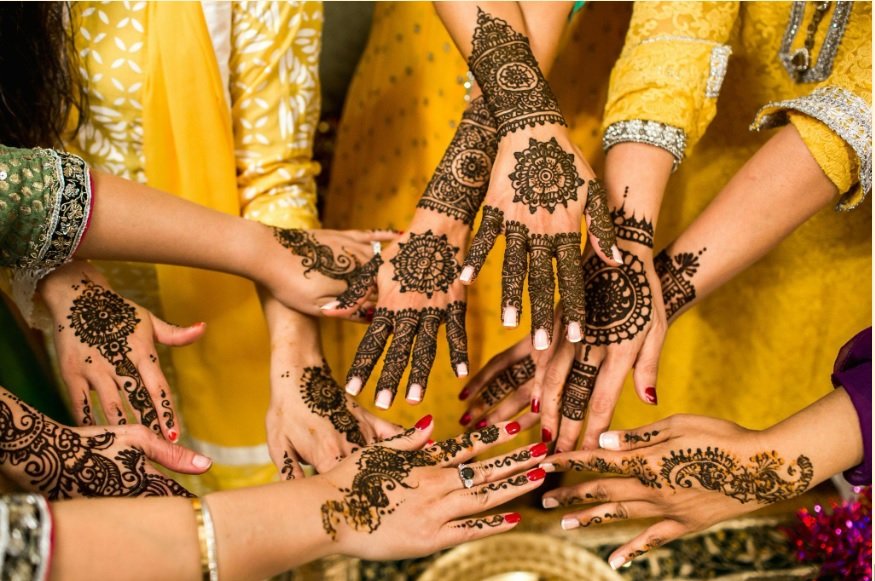
Choosing the right pattern is less about picking the trendiest motif and more about reading proportions. A good henna artist studies the hand for a few minutes before drawing a single line. You can do the same in front of a mirror well before the sangeet evening and save yourself from a rushed compromise on the actual morning.
Bridal preparation often spreads across dozens of browser tabs, from lehenga fittings to catering schedules. During a quiet break, a cousin might read more about crypto casinos or another interest while the bride reviews plans with her partner. Everyone relaxes differently, so leave enough free time after the appointment for the henna to dry without interruptions.
Start With The Shape You Actually Have
Before you save fifty reference images, hold your hand flat against a plain sheet of paper and look at it honestly. Most bridal hands fall into one of a few broad categories, and each category rewards a different density of pattern.
Long and Slender Hands
Long fingers give you room for vertical storytelling. Elongated peacocks running from the wrist to the middle finger, a bride and groom motif on the palm, and jaali net work stretching along each finger. What you want to avoid is heavy horizontal banding at the wrist, which visually chops the length you already have. Keep the wrist work light and let the fingers carry the drama.
Broad or Square Palms
Broader palms suit a central mandala or a large paisley anchor. The eye needs a focal point in the middle; otherwise, scattered small motifs make the hand look busier than it is. Fingers here can stay simpler, with clean strips or small florals, so the palm gets its moment.
Match Motif Density to Finger Length
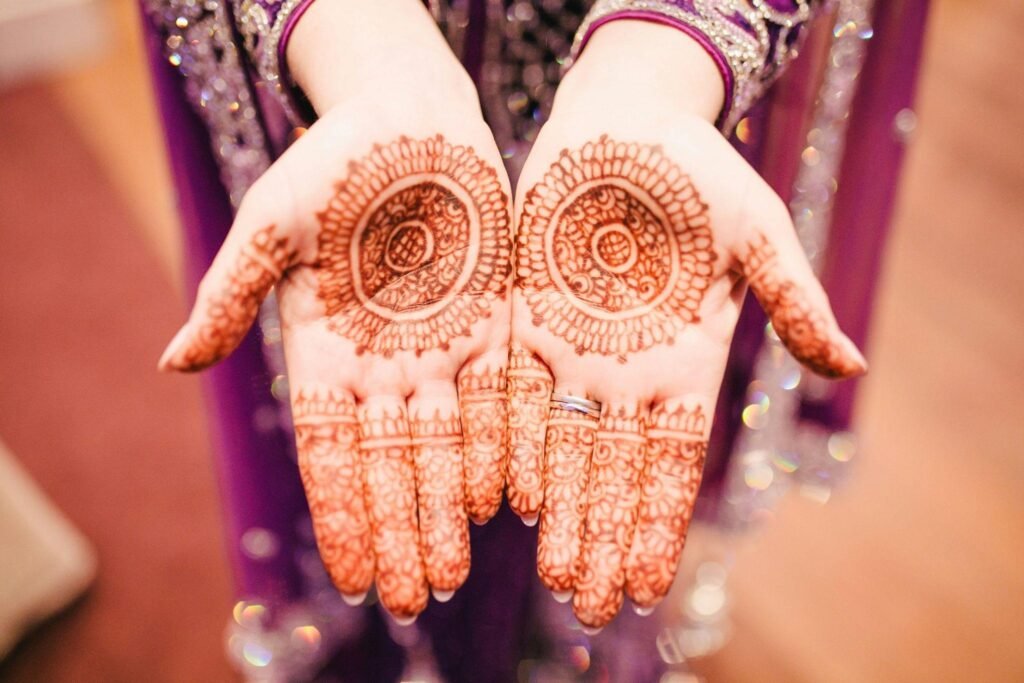
Once you know your base shape, density is the next decision. Dense Rajasthani coverage looks regal on some hands and overwhelming on others. A quick reference helps:
| Hand feature | Pattern density that flatters |
|---|---|
| Short fingers, wide palm | Medium coverage, single mandala focus, open finger tips |
| Long fingers, narrow palm | Full Rajasthani or Marwari, vertical flow, filled fingertips |
| Slim wrist, average palm | Delicate wristband, medium palm work, jaali on fingers |
| Broad wrist, strong knuckles | Bold cuff at wrist, geometric anchors, less finger fill |
The Fingertip Question
Fully dipped fingertips shorten the visual length of the hand. If your fingers are already on the shorter side, stop the design at the first knuckle and use small motifs instead. If your fingers are long and slim, a full dip adds weight and balances the composition.
The Wrist Transition
The wrist is where mehndi meets bangles, and this is where many brides regret their choice. A heavy cuff pattern clashes with a heavy chooda. A delicate wristband lets the jewelry speak. Decide the bangle stack first, then the wrist design.
Practical Criteria Before You Confirm the Design
Reference images are a starting point. Take the shortlist to your artist at least two weeks before the wedding and work through a few honest checks together:
- How long will this take, realistically, on both hands and feet?
- Does the motif have personal meaning, or was it saved because the lighting was good?
- Will it read from a meter away in wedding photos, or does it only work in a macro shot?
- Is there enough negative space for the stain to develop a deep tone?
- Does it complement the neckline and sleeve length of the bridal outfit?
The negative space point is the one most brides underestimate. Very dense designs can look muddy once the paste is scraped off because there is nowhere for the skin to breathe and show contrast.
Reading Your Hand Before The Henna Cone Touches It
The best bridal mehndi is the one that seems to grow out of your specific hand, following its bones and its proportions, as if the artist simply revealed a pattern that was already there. That reading takes fifteen quiet minutes, a mirror, and a willingness to say no to a design that everyone else loved on someone else’s palm.
Do that work early, share it with your artist, and the actual application day becomes calm instead of anxious. Your hands carry the ceremony for hours; give them a pattern that fits them and no one else.